Showing posts with label Calories. Show all posts

Thursday, 19 September 2013

September Is The Best Month To Kickstart Weight Loss Success, Says Leading Nutritionist

IF LOSING weight was at the top of your wish list for 2013, it's time to get cracking. September leaves us three months until Christmas and a great incentive to really focus on getting rid of extra kilos we're carrying before the end of the year.

"If you stick to a sensible eating plan now you can aim to lose half a kilo every week, which adds up to 10 kilograms by the end of the year," said Susie Burrell, a leading nutritionist.

According to the most recent study taken by the Australian Institute of Health, cardiovascular disease remains the biggest killer of Australians. Being overweight, having high blood cholesterol and diets loaded with saturated fat are among the most common root causes.

Depressing? The good news is the most effective changes are the small, everyday tweaks you can make to your diet and exercise program.

Here are Ms Burrell's top tips for making the most of the next four months.

1. Eat much less at night
An easy way to do this is eat more at lunchtime and then have a soup or salad for dinner. Try and stop the habit of getting home from work, stuffing your face with a heavy dinner and a dessert.

2. Be honest about your worst diet habit. Then change it.
Do you drink too much at night? Do you eat chocolate after every meal? Do you avoid exercise? Do you drink too much coffee? Just a couple of weeks making this change will help you drop a kilo or two.

3. Limit alcohol to just one or two times a week
This one is a no-brainer. Alcohol is basically a glassful of empty calories and drinking too much can easily lead to overeating. So cut things off at the pass and minimise your drinking.

4. Focus on vegetables or salad to reduce calories from carbs and proteins
Drink a vegetable juice in the morning, eat soup before each main meal and snack on vegetables. They're high in fibre and nutrients and low on calories.

5.Track your calories There are so many Apps around for your phone and you can also put something on your work computer. Even the act of writing a food journal can keep you accountable.

6. Limit eating out to one to two times a week
We eat at least 400-500 extra calories when we eat out so limiting the number of times we do it automatically supports weight loss quickly and efficiently.


Thursday, 8 August 2013

The Worst Weight Loss Mistakes


Weight loss may seem like a simple formula of eating less and working out more; however, you may be unintentionally making mistakes that will hinder your weight loss success. To avoid common slip-ups and makeover your diet, check out these seven worst weight loss mistakes.

Relying on exercise
While exercise is essential for a healthy lifestyle and for keeping off those extra pounds, research has found that, when not combined with any dietary changes, exercise does very little in respect to losing weight. Experts believe that many new exercisers even gain weight by overcompensating for their workouts. This is because many of us overestimate the calories burned through exercise and overly increase our calorie intake to fuel or reward our workouts. For maximum weight loss benefits, try to incorporate both exercise and dietary changes into your day.

Going fat-free
Many of us are in the habit of obsessively checking the fat content of products and looking out for 'low fat' labels before deciding if a food is diet friendly. However, opting for low fat products can be a huge dieting mistake as many low fat meals are packed with sugar to compensate. Also, 'reduced fat' labels only indicate that the food is lower in fat than the original product, which may not mean it is low fat at all. It is important to also remember that not all fats are bad for you. Rather than avoiding fat, try to lower your intake of saturated fats and eat more monounsaturated fats (found in avocados, olive oil and nuts) as studies have found that this can help to promote weight loss.


Switching to diet drinks
Just as low fat foods are not always the best choice for weight loss, switching to diet drinks can also inhibit weight loss, or even cause you to gain weight. Research by the Texas Health Science Center at San Antonio found that those who consumed diet drinks daily experienced a 70 per cent greater increase in waist circumference than those who drank none, while a previous study showed that obesity risk increased by 41 per cent for each diet drink consumed. It is thought this may be because artificial sweeteners trigger appetite, and they may also inhibit the brain cells that make you feel full.

Getting hung up on your body weight
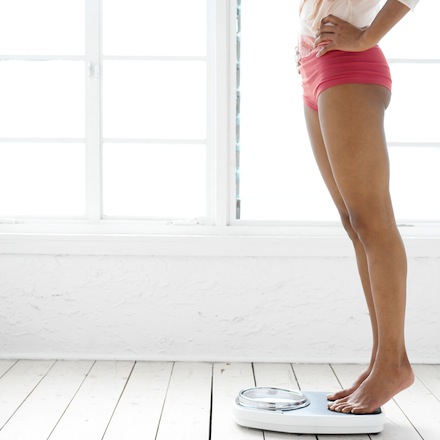
Many dieters become fixated on the number on the scales; however, this can actually be counterproductive. Not only is your body weight not an accurate reflection of how well you are doing (after all, how do you know how much of that weight is muscle, water or undigested food and how much is fat?), failing to see the results you want can also affect your motivation, lead to emotional eating, or cause you stress which can lead to weight gain. Rather than getting hung up on your weight, learn to relax and enjoy your healthy eating plan, and look out for other positive effects of your diet such as glowing skin, increased energy levels and your clothes starting to fit better.

Being too restrictive
While eating too much food will inevitably cause you to gain weight, eating too little can also be a big dieting mistake. Firstly, not giving your body an adequate amount of food will make it go into starvation mode, causing the metabolism to slow down and the body to hoard fat and calories. Furthermore, making your diet too restrictive and cutting out all the foods you like is unrealistic and will mean you are more likely to give in. It is also pointless to give up these foods unless you plan on giving them up forever, as the pounds will just pile on again once your reintroduce them into your diet.

Giving up at the first hurdle
Many of us take an all or nothing approach to dieting, meaning one small wobble can lead to us ruining our diets and giving up entirely. After all, if you've already broken your diet and eaten a cookie, you may as well eat the whole packet, right? Wrong! If you're serious about losing weight, it's important not to let lapses (big or small) get you down. So, you caved in and ate your body weight in chocolate? Don't dwell on it. Just because you have given into temptation once it doesn't mean that you will again, and it doesn't mean that you have failed. Simply put the past behind you, pick yourself up and carry on.

Overestimating your self controlAlthough it is great to embark on your diet with a positive and determined mindset, being too confident - and failing to prepare for those moments of weakness - could be your biggest mistake. Don't rely on being too disciplined to fail; instead accept that we all lack willpower at times and try removing temptation to prepare for those weak moments. Clear the cupboards of chocolate, ignore the urge to purchase your favourite treats (even if you claim they are for guests and you are sure you will be able to resist them) and stay away from places and situations that will tempt you to indulge. Make it as difficult for yourself to break your diet as you can.


http://www.huffingtonpost.co.uk/realbuzzcom/the-worst-weight-loss-mistakes_b_3639434.html

Wednesday, 22 May 2013

Focus More On Your Brain And Less On Your Diet To Lose Weight

Weight loss is tricky business. Obviously what you eat has a huge impact on your health and body weight. But anyone who has ever tried to modify their diet for the sake of losing weight knows it isn't so simple.

Most of us understand intuitively that broccoli is healthier than cookies. We can talk about sugar, fat, gluten, and antioxidants all day, but that doesn't change the fact that cookies taste good and you still want to eat them. Any weight loss plan that simply tells you what to eat and neglects why you make the choices you make is unlikely to help you in the long run.

Nutrition knowledge is important, but it is only one piece of the puzzle. The real secret is understanding your behaviors and motivations at their roots, and using this information to have a meaningful impact on your health. In this sense, good health starts in your brain, not on your plate. 


Willpower is a Limited Resource

The first thing you need to understand is that we don’t have as much control over our food decisions as most of us assume. We tend to believe that we can call on willpower anytime we wish and use it to order a salad instead of a burger, and if we fail to do so it is our own fault. However, self-control is not something we can simply turn on or off, and as a result the process of decision making––particularly when it comes to food––is much more complex.

Approximately 20 percent of the calories we expend daily are used by our brains. Because brain activity is so costly, things like self-control and decision making cannot be relied on indefinitely. As a result, willpower is a limited resource. Like a muscle, willpower becomes fatigued when exercised too frequently. All the decisions you make throughout the day deplete your willpower, and when you start running out of steam your ability to choose healthy food over more convenient food rapidly diminishes. Ironically, increasing your blood sugar can help restore willpower to some extent. But finding a healthy way to raise blood sugar in a state of depleted willpower can pose quite the dilemma. Tired brains find it much easier to just grab a cookie.

The way our brains cope with the willpower conundrum is to automate as much of our decision making as possible. It does this by creating habits. Habits are specific behaviors that occur in response to a trigger or cue. They are also always associated with some kind of reward, which in turn reinforces and strengthens the trigger. For example, a buzz in your pocket is a cue to reach down, grab your phone, pull it out, and glance at the screen. The information you see causes a bit of dopamine to be released in the reward center of your brain. We humans love novelty, which is why most of us have a reflexive response to checking our mobile devices when we receive a notification. This is how habits are born.

Once established, habits occur automatically without expending any willpower or mental effort. Scientists have estimated that up to 90 percent of our daily food decisions occur as a result of habits. This saves our brain energy for more difficult decisions where habits cannot be used. 

How Can this Knowledge Help Us Lose Weight?

For one thing, it shows that willpower is not particularly reliable as a means to achieve lasting weight loss, and we’re better off spending our efforts creating healthy habits.

It also teaches us that any habit we wish to develop needs to impart a meaningful reward in order for it to stick. You can probably guess that some vague promise of future thinness is not sufficient––the reward for any habit needs to be immediate and tangible. This means that in order to achieve long-term weight control you need to find healthy foods you actually enjoy eating, physical activities you like doing, and spend your time making these as convenient and accessible as possible.

Fabulous news, right? Using willpower for restrictive dieting is difficult and incredibly unpleasant. We can all let out a collective sigh of relief that it doesn't actually work. To achieve true success in health and weight loss, we’re better off quitting diets altogether and focusing on building healthy habits we enjoy. Try starting with something as simple as breakfast. Warm muesli with a splash of almond milk and cinnamon only takes two minutes to prepare and is absolutely delicious. Invest in a pedometer and challenge yourself to reach 10,000 steps a day. Setting and achieving an attainable goal is a very powerful reward, and is one of the reasons so many people love video games.

Since our brains are easily overwhelmed, don’t try to develop too many habits at once. Work on just two or three habits at a time, and build from there. Habits take anywhere from two weeks to six months to take root, but on average about two months. Start with the easiest ones and work your way up. Once you've built enough good habits, your health will take care of itself.